Engineering for the difficult day
On dry summer asphalt, the coefficient of friction ($\mu$) between a passenger car tyre and the road surface typically sits between 0.80 and 1.00. On polished wet ice at −1 °C—where pressure and frictional heating form a microscopic quasi-liquid water film—that coefficient drops to 0.10 or lower. Braking distances multiply fourfold to eightfold, and lateral cornering forces vanish abruptly.
Every winter between November and March, vehicle dynamics teams convene on frozen lakes around Arjeplog in Swedish Lapland and Ivalo in Finnish Lapland (home to Test World and Nokian Tyres’ White Hell facility). Here, suspension kinematics, regenerative braking blending, tyre polymers, and optical sensor heaters are calibrated against the hardest boundary conditions in road transport.
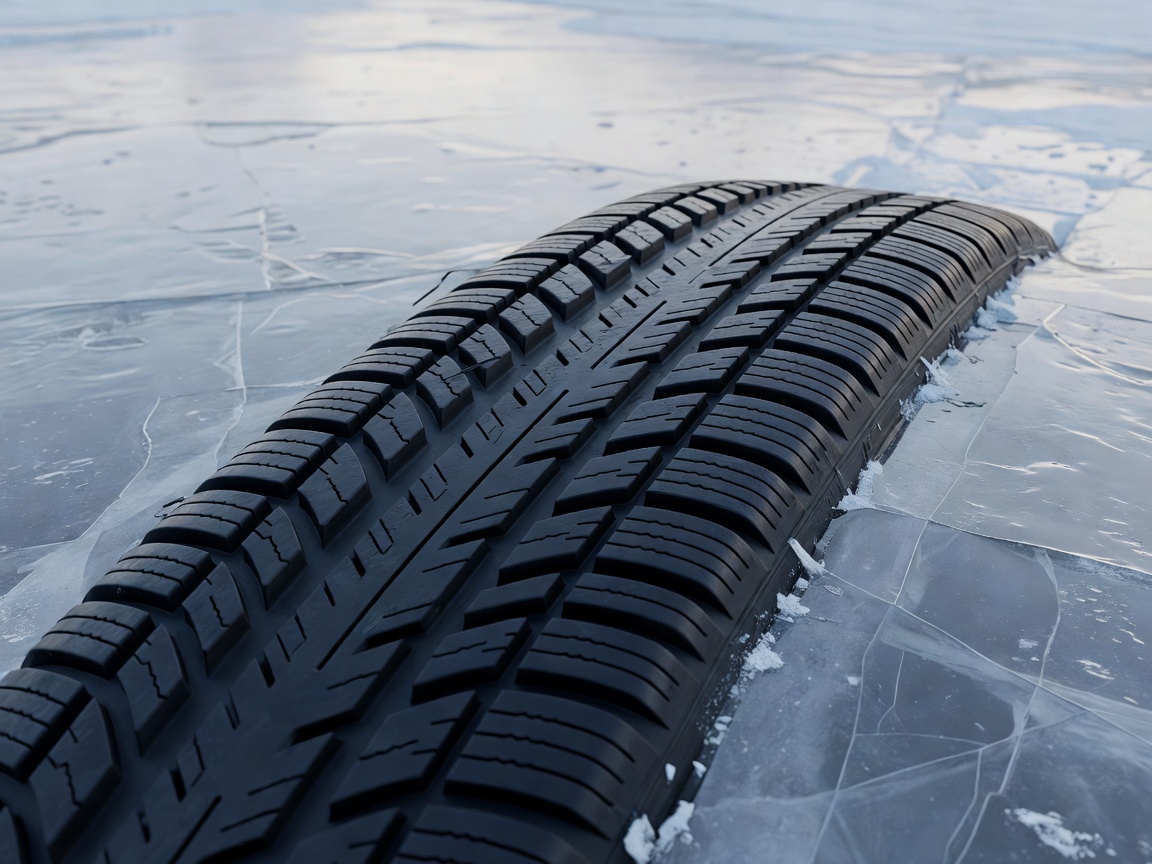
Studded carbide pins vs. Nordic non-studded compounds
Why do drivers in coastal Norway or inland Lapland choose different winter tyres from drivers in Stockholm or Gothenburg? The decision hinges on ice temperature and airborne particulate regulations. A studded winter tyre embeds 130 to 250 tungsten-carbide pins mounted in cushioned aluminium bodies. When ice sits near 0 °C and is coated in water, mechanical pin penetration provides the shortest stopping distance and highest lateral stability.
However, on bare granite asphalt in cities like Oslo, Trondheim, and Stockholm (where Hornsgatan has restricted studded tyres to curb street-level dust), metal studs abrade the pavement, generating coarse $PM_{10}$ mineral dust. Consequently, Nordic tyre manufacturers developed non-studded friction tyres certified to the ISO 19447 Ice Grip standard—which requires a minimum 18% better ice braking index than a reference tyre. These tyres rely on three physical mechanisms:
- Low Glass-Transition Temperature ($T_g$): Natural rubber blended with rapeseed or pine oil plasticizers and high-surface-area silica prevents the tread blocks from hardening into brittle plastic at −30 °C.
- Capillary Micro-Pores & Pump Sipes: Dense zig-zag slits (sipes) open as they enter the footprint, sucking up the lubricating water film via capillary action so dry rubber contacts the ice crystal lattice directly.
- Dual-Motor Torque Vectoring & Regen Blending: In heavy EVs, sudden liftoff regenerative braking on black ice can break rear-axle traction before conventional ABS reacts. High-frequency inverter control modulates motor torque every 2 milliseconds— roughly five times faster than hydraulic brake calipers.
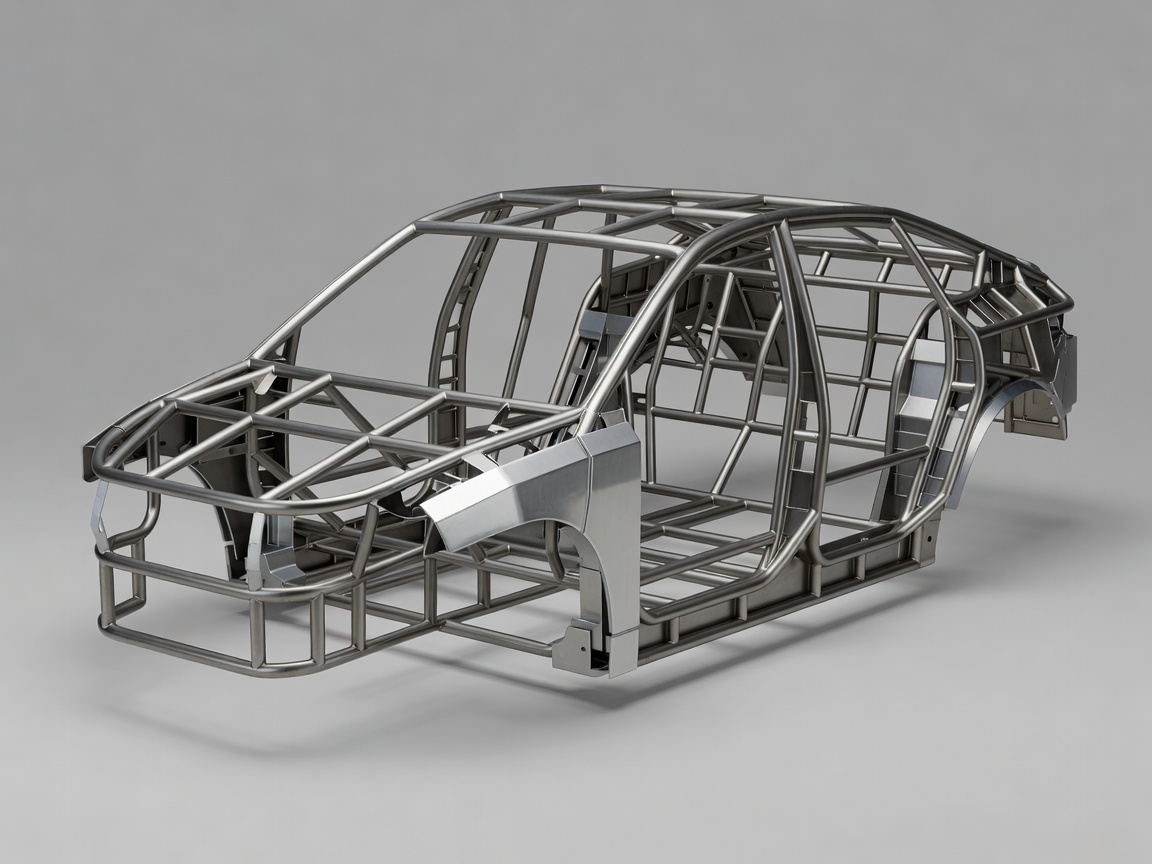
The elk strike geometry, boron steel cages, and sensor clearing
In 1997, Sweden’s parliament enacted Nollvisionen (Vision Zero), an engineering doctrine stating that while human drivers will inevitably make errors, the road and vehicle system must be designed so those errors do not result in fatal or life-changing biomechanical forces. Two distinct Nordic crash scenarios illustrate how this principle shapes structural steelwork:
First is the high-speed evasive lane change—famously scrutinized since October 1997 when Swedish magazine Teknikens Värld conducted the "Moose Test" (now standardized under ISO 3888-2). A vehicle swerving around an obstacle in its lane without braking must resist rollover and oversteer through low centre-of-gravity battery placement, stiff anti-roll geometry, and selective outer-front wheel braking via Electronic Stability Control (ESC).
Second is the direct impact with an adult Eurasian elk (Alces alces). Standing up to 2.1 metres at the shoulder and weighing 400 kg, an elk’s torso sits above the front bumper and crash cans. Upon impact, the animal’s legs sweep out and the full mass strikes the windscreen header and A-pillars directly. Both Saab (whose engineers performed hundreds of calibrated moose-carcass dummy drops) and Volvo reinforced the upper A-pillar and front roof bow with hot-formed ultra-high-strength boron steel (~1,500 MPa yield strength) to prevent roof collapse into the front occupant head space.
Meanwhile, active avoidance depends on sensors remaining clear during blizzards. Snowflakes and freezing rain attenuate 77 GHz millimeter-wave radar and 905 nm/1550 nm LiDAR beams. Nordic-ready vehicles mount cameras behind the top of the heated windscreen within the swept arc of heated wiper blades, or integrate high-pressure washer nozzles and resistive heating filaments directly into radar radomes and roof-pod optical windows.
Boundary conditions and physical countermeasures
| Hazard / Condition | Physical Mechanism | Structural or Mechatronic Countermeasure | Reference Standard / Protocol |
|---|---|---|---|
| Adult Cervid (Elk) Impact | 400 kg mass concentrated at 1.2–1.6 m height bypasses front longitudinal rails | Hot-stamped boron steel A-pillar & roof header; high-penetration-resistant PVB windscreen | Internal Nordic OEM Elk Strike Rig & IIHS Roof Strength |
| Double Lane Change Avoidance | Rapid yaw reversal transfers load to outside front tyre, risking roll or spin | Low battery floor CoG, rapid ESC hydraulic pulse on outer front wheel | ISO 3888-2 (Obstacle Avoidance / Moose Test) |
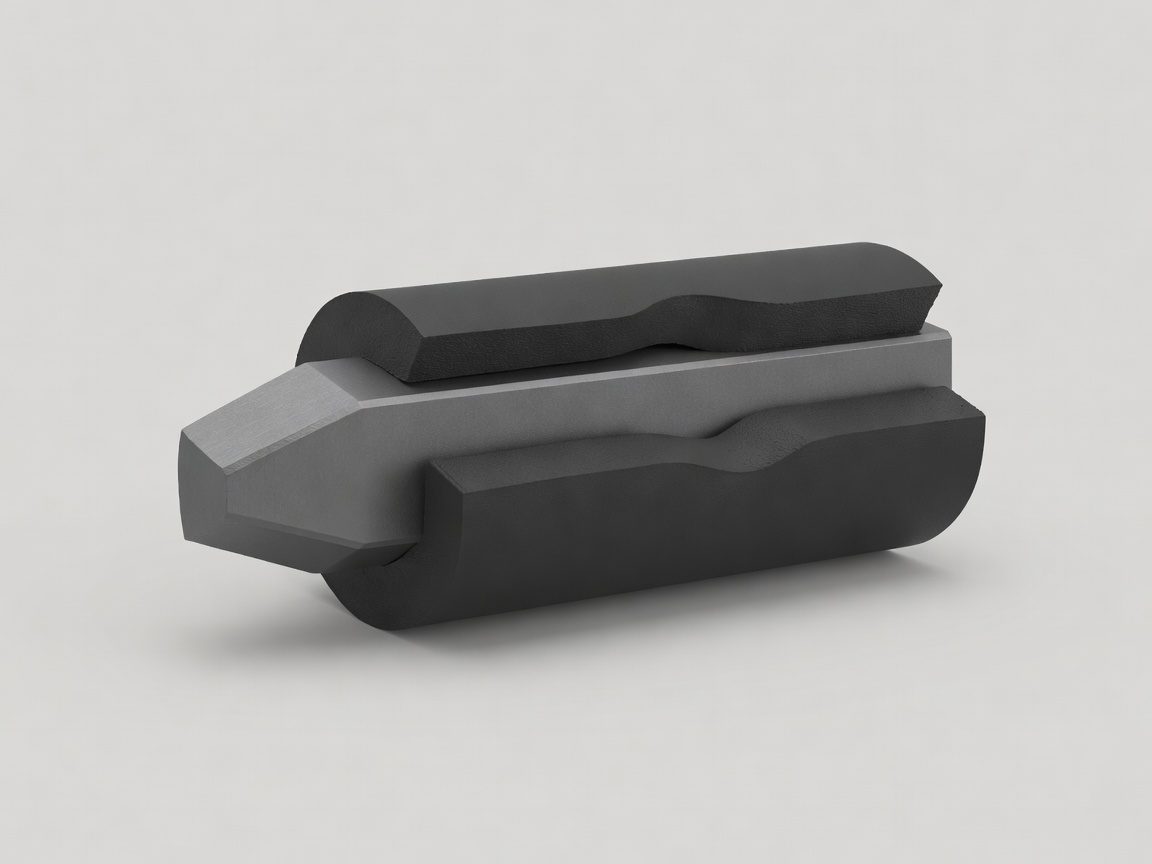
| Small Overlap Frontal Crash | Impact outside main longitudinal frame rail loads front wheel into footwell | SPOC (Small Overlap Protection) cast aluminium block shears wheel outward away from sill | Euro NCAP & IIHS Small Overlap Frontal |
| Wet Snow Accretion on ADAS | 5 mm slush layer absorbs 77 GHz radar waves and blocks optical cameras | 40 W resistive radome heater grid; wiper-swept upper windscreen camera housing | UNECE R152 (AEBS) & Winter Proving Ground Validation |