Form with a job to do
Why do Scandinavian passenger cars historically feature tall daylight openings (the glass area between the beltline and roof rail), flat sill stampings that wrap underneath the door bottoms, and minimal chrome brightwork around the instrument binnacle? Each detail traces back to a physical constraint of driving across the Nordic peninsula.
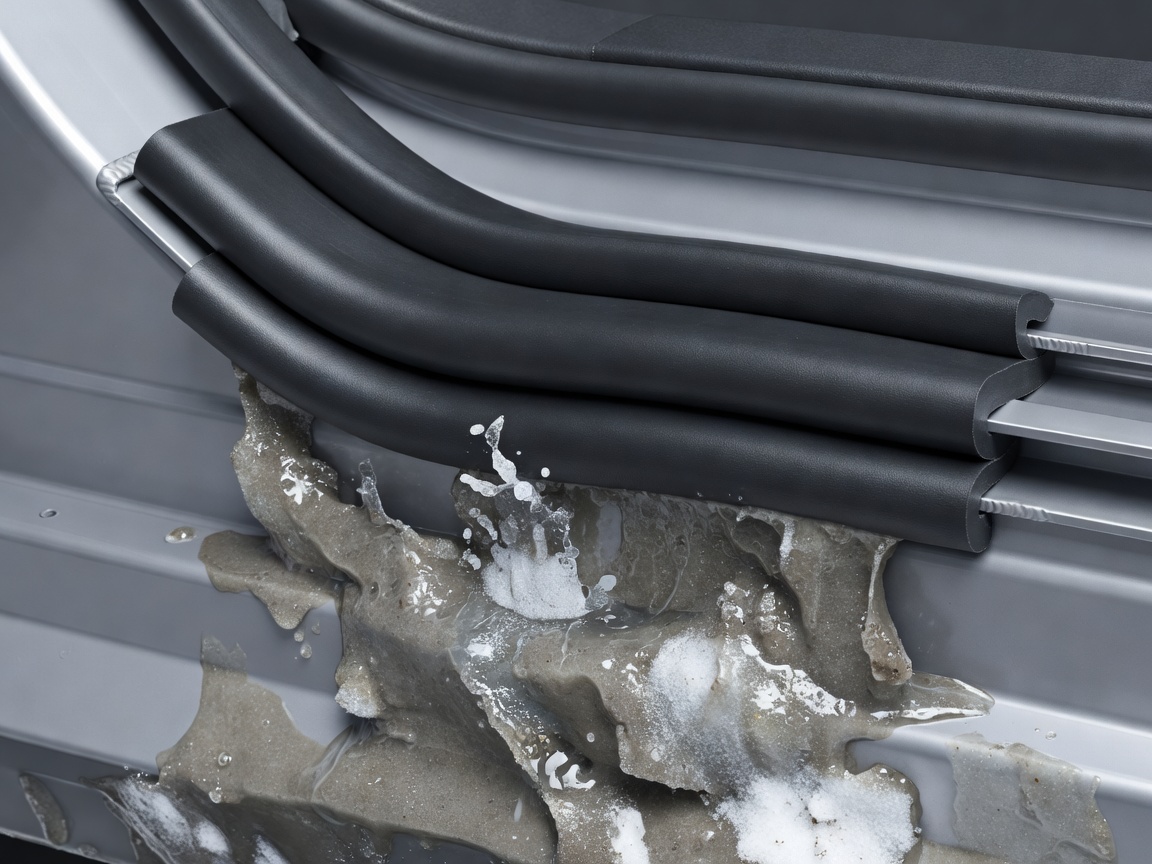
When a vehicle travels along slush-covered gravel or salted arterial roads such as Sweden’s E4, road spray coats the lower flanks in abrasive grime. By extending the lower door skin over the structural rocker panel (a weather-sealed wrap-around door sill common on Volvo and Polestar crossovers), engineers keep the painted sill clean so occupants do not soil winter coats when stepping out of the cabin. Similarly, matte open-pore ash wood, woven flax composites, and anodized zinc replaces high-gloss piano black or mirror chrome on the dashboard upper surface to prevent blinding specular reflections when the winter sun sits just 8 degrees above the southern horizon.
Orthopaedic geometry and the H-Point
In automotive packaging, every interior dimension radiates from the H-point (hip point)—the theoretical pivot centre between the human torso and thigh as measured by a weighted three-dimensional SAE J826 mannequin. Beginning in 1964, when Volvo collaborated with orthopedic surgeons at Sahlgrenska University Hospital in Gothenburg to design the Amazon and later 140-series seats, Nordic seat engineering focused on maintaining the natural lordotic curve of the lumbar spine.
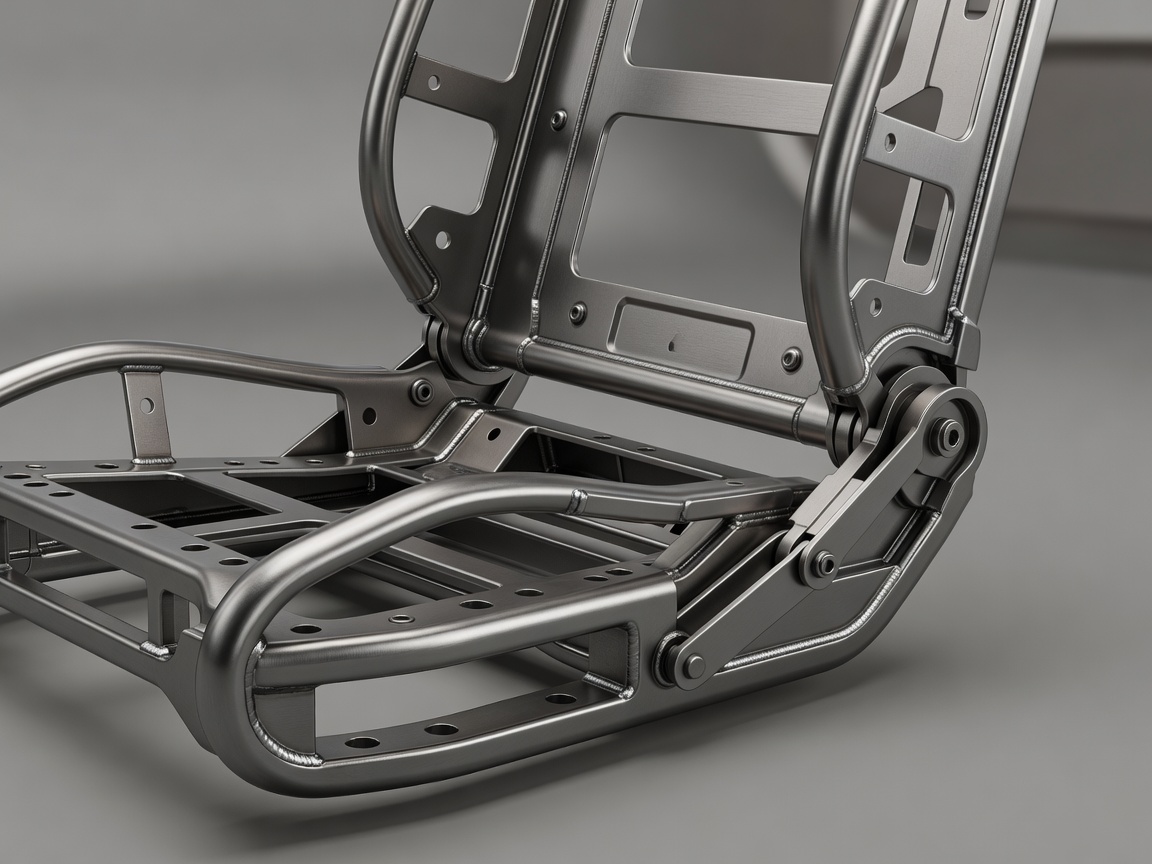
Most passenger fatigue during four-hour drives between Oslo and Bergen stems not from cushion softness, but from posterior pelvic tilt. If a seat pan lacks sufficient thigh support angle or allows the pelvis to slide forward (submarining), intradiscal pressure in the L4–L5 vertebrae rises sharply. Modern Scandinavian seat frames address this through four mechanical assemblies:
- Extendable Cushion Nose: A sliding front bolster increases effective thigh contact length for taller drivers without pressing against the popliteal artery behind the knee of shorter drivers.
- Four-Way Pneumatic Lumbar Matrix: Air bladders mounted to a spring-steel wire mat adjust curvature height and prominence independently.
- Cold-Cured Multi-Density Polyurethane: Firmer lateral bolsters (65–75 kg/m³ density) stabilize the ribcage on cambered rural roads while a softer central insert distributes ischial tuberosity pressure.
- WHIPS Yielding Hinge: In a rear-end collision, a deformable metal link in the seatback recliner allows the entire backrest to translate rearward first and then tilt backward, cradling the torso and head simultaneously to limit cervical spine hyperextension.
Why wool, flax, and bio-attributed polymers replace heavy hides
Touch an unheated leather seat at −18 °C and the surface feels bitingly cold. That sensation is governed by thermal effusivity—a material’s ability to exchange thermal energy with human skin, defined as the square root of the product of thermal conductivity, density, and specific heat capacity ($\sqrt{k \cdot \rho \cdot c_p}$). Smooth bovine leather has higher density and thermal conductivity than woven textiles, drawing heat rapidly out of the occupant’s clothing during the first three minutes before resistive seat-heater wires reach equilibrium.
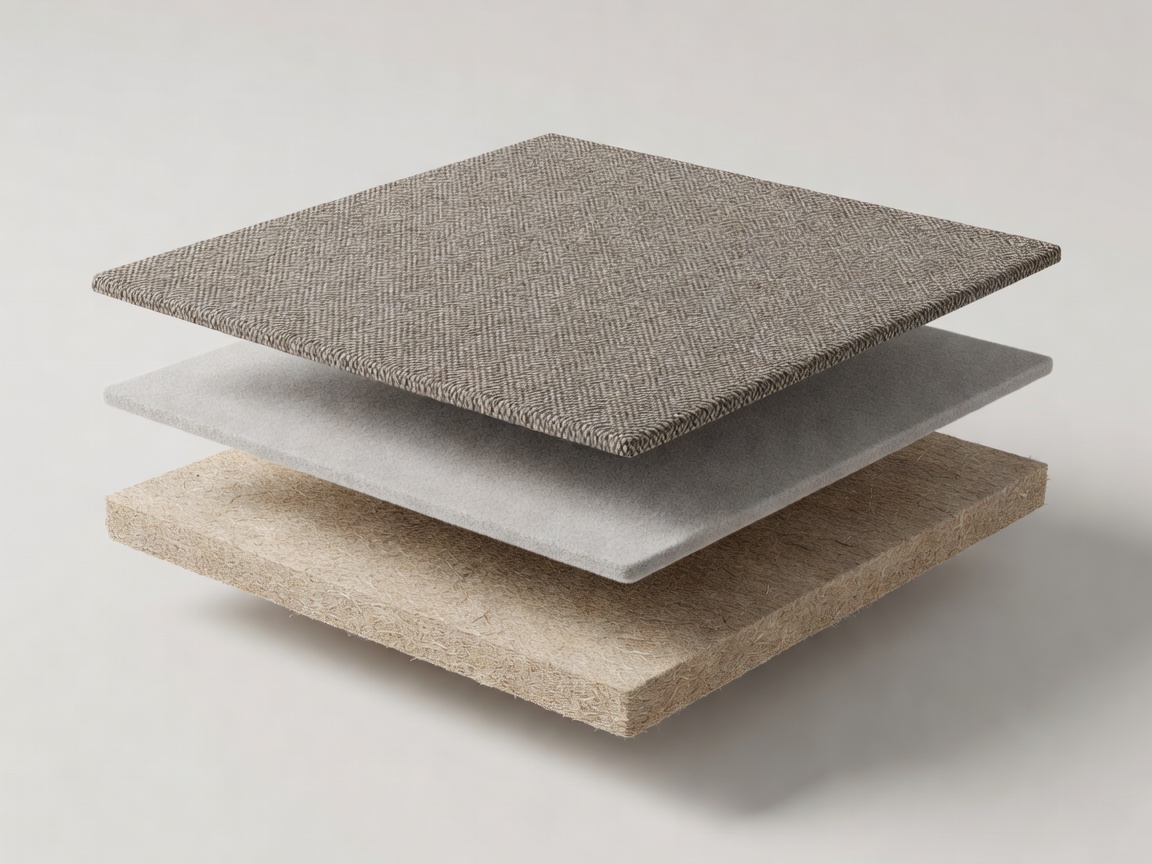
Tailored wool blends (typically 30% traceable mulesing-free wool and 70% recycled polyester for abrasion resistance exceeding 100,000 Martindale cycles) trap microscopic pockets of air within crimped keratin fibres. The result is lower thermal effusivity in winter, higher moisture permeability in summer, and a 35% mass reduction compared with full-grain leather hides.
Behind the visible upholstery, structural trim panels increasingly use Bcomp ampliTex flax-fibre composites. Cultivated in European crop rotations, woven flax reinforcement saturated with polypropylene resin reduces interior panel weight by up to 40% while improving vibration damping—reducing high-frequency cabin buzz over coarse granite-aggregate Nordic asphalt. Furthermore, interior assemblies are audited against the Oeko-Tex Standard 100 and VDA 278 thermal desorption standards to keep volatile organic compounds (VOCs), formaldehyde, and contact allergens (such as hexavalent chromium and nickel release) near zero.
Glove ergonomics, night vision, and the touchscreen debate
In the 1990s, Saab introduced the "Night Panel" button (inspired by aviation cockpits built in Linköping), which extinguished every instrument dial except the speedometer to reduce pupil constriction during dark winter drives. Contemporary electric vehicles face the opposite risk: oversized central liquid-crystal displays emitting high luminance and burying critical defrost or wiper functions inside multi-level menus.
Independent safety assessors—including Euro NCAP in its 2026 protocol updates and researchers at VTI (the Swedish National Road and Transport Research Institute)—have measured glance duration when drivers operate touch-only interfaces on rough roads. Physical rotary encoders, knurled steering-wheel rollers, and dedicated hardware stalks for windscreen clearing allow muscle-memory actuation without removing eyes from the roadway or removing insulated winter gloves (which fail on standard capacitive screens unless moisture-bridged).
| Interior Material / Interface | Mass & Thermal Behaviour | Acoustic / Ergonomic Consequence | Verification Standard |
|---|---|---|---|
| Tailored Wool Blend (30/70) | Low thermal effusivity; warm initial touch at −15 °C | Absorbs mid-to-high frequency cabin reflections (1–4 kHz) | ISO 12947 (Martindale abrasion), Oeko-Tex 100 |
| Woven Flax Composite Carrier | ~1.35 g/cm³ density; 40% lighter than ABS injection moulding | Higher intrinsic mechanical loss factor damps road-induced panel rattle | VDA 278 (VOC & fogging emission limits) |
| Laminated Acoustic Side Glass | Two 2.1 mm soda-lime panes bonded with 0.76 mm PVB interlayer | 3 to 5 dB(A) reduction in wind and studded-tyre roar at 110 km/h | ECE R43 safety glazing & intruder resistance |
| Physical Defrost & Hazard Keys | Mechanical micro-switch with 3.5 N actuation force | Operable with thick leather mittens; zero menu-navigation glance time | Euro NCAP 2026 Direct Physical Control guidelines |